A Shelf Is an Argument: Why Arabic Fiction Needs More Than One Label in UK Bookshops
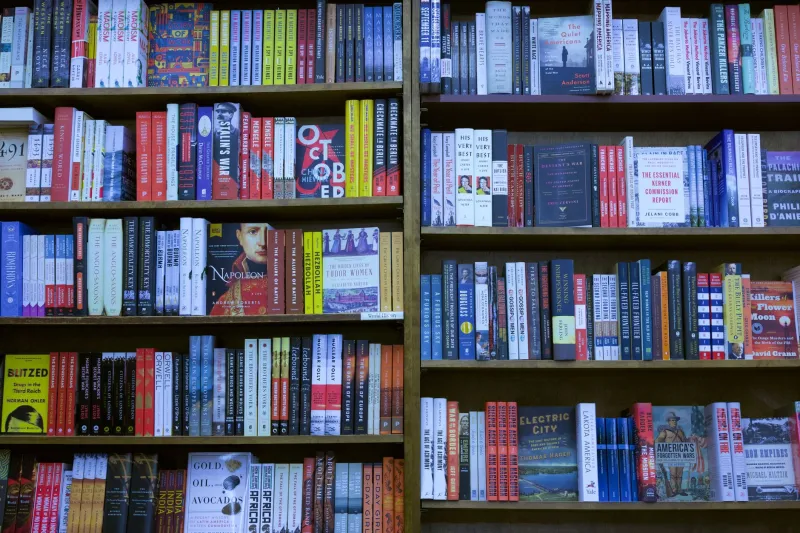
Walk into a decent-sized bookshop in Britain and you can usually find the Arabic fiction section without asking. It is the shelf, often a single shelf, marked with something like “Arabic Literature” or “Middle Eastern Writing”. On it: a family saga from Beirut, a slim experimental novel from Cairo, a coming-of-age story from the Gulf, maybe a crime novel from Iraq. All written in Arabic, all translated into English, all given the same small sign. The sign is not wrong. It is just doing far too much work.
I am not arguing for scrapping the umbrella. “Arabic literature” is a useful starting point, especially for readers who do not know where to begin. But a label that covers everything from Naguib Mahfouz to a contemporary Kuwaiti road novel is not really a label. It is a filing cabinet with one drawer. And in 2026, with more Arabic fiction in English translation than ever before, UK bookshops and online retailers can afford to be a bit more precise.
The umbrella is useful. It is also a blindfold
Imagine a reader in Bristol who loved a big, warm, multigenerational novel and wants another one. They see “Arabic Literature”, pick up the slimmest, strangest book on the shelf — because it has the best cover — and find themselves inside a fragmented, formally daring text that makes no concessions. They might love it. More likely, they will put it down and assume Arabic fiction is not for them. The book did nothing wrong. The shelf did.
The same happens in reverse. A reader who wants something formally adventurous is handed a sprawling family saga because it is the only Arabic novel the shop has face-out. They wanted a puzzle; they got a picnic. Both are good. Neither is the other.
Booksellers know this. The ones I have spoken to in Manchester, London and Edinburgh all say the same thing: they want to stock more Arabic fiction, but they have limited space, limited time and a publisher metadata system that often gives them little more than “Arabic” and “literary fiction” to work with. One bookseller told me she relies on publisher reps and her own reading to separate the pile. When she is busy — which is always — the pile stays a pile.
What a shelf is actually for
A shelf is not a neutral piece of furniture. It is an argument about how books relate to one another. Put all Arabic fiction together and you are saying, implicitly, that the language is the most useful thing to know about these books. That is true for some readers, especially those learning Arabic or following translation. But for most UK readers, the language is a starting point, not the destination. They want to know: is this funny? Is it political? Is it a doorstop or a train read? Is it about exile, or inheritance, or a murder in a small town?
This is not about dumbing down. It is about giving readers handles. A good bookshop does this instinctively with crime, science fiction and literary fiction. It does not put every novel written in English under one sign. Why should Arabic be different?
Three ways to slice the same pile
No shop needs to create twelve new sections. But a few practical sub-shelves, shelf talkers or “ways in” cards would make a real difference.
By region. Egypt, the Levant, the Gulf, North Africa and the Arabic-speaking diaspora are not watertight categories, but they give readers a rough map. A reader who loved a Lebanese family saga might want another Levantine novel. A reader curious about Gulf society might want Kuwaiti or Omani fiction. Region is not destiny, but it is a useful signpost.
By era. Separate the classics in translation from contemporary fiction. This sounds obvious, but it rarely happens. A reader who wants to start with Mahfouz or Hanan al-Shaykh is often looking for something different from a reader who wants the newest translated novel from Cairo. Both are valid. They just need different shelves, or at least different stickers.
By theme and mood. This is where independent bookshops can be brilliant. “Family and memory”, “politics and protest”, “migration and exile”, “crime and noir”, “short novels for the commute”, “experimental voices”. These labels are not perfect, but they are human. They answer the question a reader is actually asking: what kind of reading experience am I getting?
Cross-shelving helps too. A Lebanese novel about migration could sit in Arabic fiction and in a travel or diaspora display. A Gulf coming-of-age story could sit with general contemporary fiction, not just in the language section. The point is not to ghettoise Arabic writing but to let it move.
The online shelf is worse — and easier to fix
Online retailers are often more guilty than physical shops. Search for Arabic fiction and you may be offered a category called “Middle Eastern Literature”, which lumps together Arabic, Persian, Turkish and Hebrew writing, and sometimes anything with a camel on the cover. That is not a category. It is a region-shaped shrug.
Filters could help. Let readers browse by country, original language, translator, era and theme. Let them see “translated from Arabic” as a clear tag, not a buried detail. Curated lists — “Five Egyptian novels for readers new to Arabic fiction”, “Gulf fiction in English”, “Lebanese family sagas” — are cheap to make and genuinely useful. Publishers and booksellers already have the metadata. They just need to use it.
A label should be a door, not a verdict
None of this is about splitting Arabic fiction into ever-smaller boxes. It is about giving readers more doors. “Arabic literature” can remain the umbrella. But under it, we need the equivalent of shelf talkers, hand-written cards and online filters that say: if you liked this, try this; if you want a family saga, start here; if you want something strange and short, start there.
UK readers are curious. They are not experts, and they do not need to be. They need bookshops and websites that make the first step a bit less random. A better label does not reduce Arabic fiction to a category. It opens it up. And a shelf that helps a reader find the right book is worth more than a sign that covers everything and says nothing.