The Footnote Is Not the Problem: Rethinking How UK Book Clubs Read Arabic Fiction
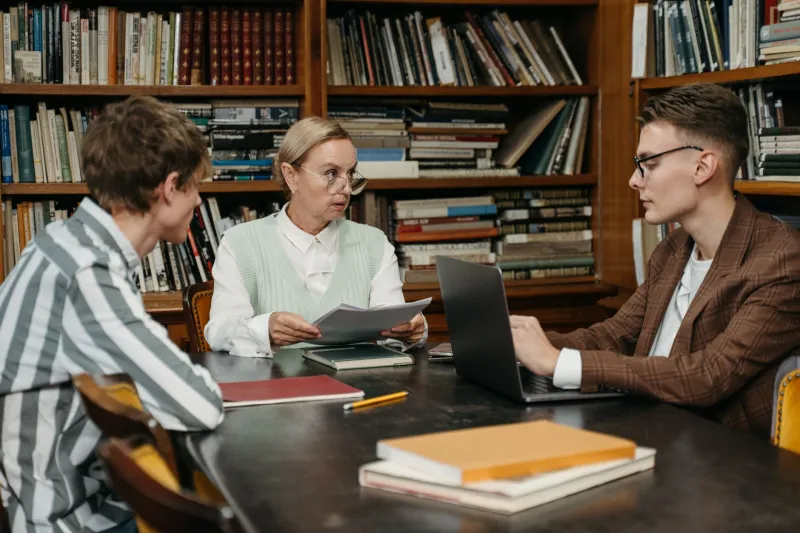
Picture the scene, because it plays out somewhere in Britain most weeks. A reading group in a suburban library has just finished a translated Arabic novel. One member says she loved it “once I worked out who was speaking.” Another admits she skipped “the bits with the religious stuff.” A third asks whether the book is “accurate.” Nobody is being careless. They are simply using a toolkit built for English-language fiction on a book that works differently.
This is not a scolding. Book clubs are one of the few places where people still argue about books with strangers, and that is worth protecting. But a handful of small adjustments can turn a frustrating evening into a memorable one.
Five habits worth unlearning
Dialect is not a typo. Arabic fiction often shifts between formal written Arabic and a regional spoken register. When a character slips into Egyptian or Moroccan dialect, the text is doing something deliberate — roughly the equivalent of a character in a British novel moving from received pronunciation into broad Glaswegian. Translators signal these shifts in different ways: slang, fragmentation, italics, or nothing at all. If a passage reads oddly, ask what is being signalled before assuming something went wrong.
The translator's note is part of the book. Many publishers bury it at the back, after the acknowledgements, where nobody goes. Read it first. It will tell you about names, dates, puns and allusions that the novel quietly depends on.
Religion is not scenery. A Qur'anic phrase dropped into a paragraph is rarely decoration; it may be carrying irony, consolation or a rebuke. Not recognising the reference is fine. Noticing that there is a reference is the whole point.
The novel is not a briefing paper. The question “does this accurately represent Syria?” is unanswerable and slightly unfair. No single novel stands in for a country. Ask instead what the book is doing with its material — where it exaggerates, where it withholds, whose voice it refuses to give you.
Arabic literature is not one thing. It spans more than twenty countries, several religious traditions and a wide range of dialects. Plenty of Arab writers work in English or French too, and their books raise different questions again.
A five-step framework for the evening itself
- Start with the translator. Who are they? Which prize shortlists have they appeared on? Is there an afterword? Ten minutes here saves an hour of confusion.
- Map the languages. Ask where the text changes register and how the translation shows it. This is often the richest discussion of the night.
- Track the names. Use a whiteboard or a shared note. Transliteration varies between editions, and a character list on one sheet of A4 prevents twenty minutes of “wait, is he the brother?”
- Nominate one knot. Each reader brings a single passage they did not understand. The group sits with it for ten minutes without trying to solve it. Ambiguity is usually intentional.
- Close on craft, not authenticity. Ask what the book is made of — structure, imagery, silence — rather than what it tells us about a region.
“The useful question is not ‘did I understand it?’ but ‘what did I notice?’” a translator told a Leeds reading group last year. It is the best single piece of advice I have heard on the subject.
Editions that do some of the work for you
Some presses are simply better at supporting readers. Fitzcarraldo Editions, And Other Stories, Telegram and Banipal Books all publish Arabic fiction with useful apparatus, and Banipal magazine is a good place to find new translations before they become books. The Saif Ghobash Banipal Prize for Arabic Literary Translation is an excellent curation tool: its shortlists are a reliable shortcut to translations that read well as prose, not just as documents.
If your group wants one practical upgrade, make it this: always check that the edition you are buying includes a translator's note or afterword, and read it before chapter one.
Three novels that work brilliantly for first-timers
Frankenstein in Baghdad — Ahmed Saadawi, translated by Jonathan Wright. A comic horror novel set in occupied Baghdad, with short chapters and a genuinely gripping plot. Ideal for the member who insists they “don't do difficult fiction.”
Celestial Bodies — Jokha Alharthi, translated by Marilyn Booth. Three sisters in Oman, short chapters, and a family tree at the front that does the heavy lifting. It won the International Booker in 2019 and remains one of the friendliest entry points into Gulf fiction.
Minor Detail — Adania Shibli, translated by Elisabeth Jaquette. Two halves, around a hundred pages, and an argument that will run until closing time. Short enough that nobody arrives unprepared.
For hosts and librarians
A few small, unglamorous things make a real difference. Print a one-page character list. Confirm before the meeting that your library service actually holds the translation you have chosen, not just an English-language title by the same author. Consider a short story first — Banipal and ArabLit Quarterly both publish work that suits a single session. And if you can, invite a translator to join by video call; the Translators Association and the Banipal prize network are both good starting points, and translators tend to be generous with their time.
Finally, be gentle with the schedule. A translated novel read in a fortnight, in the run-up to Christmas, is a translated novel half-read. Give it three weeks and the discussion will be twice as good.
None of this is about gatekeeping, and none of it requires a degree. It is simply a matter of noticing more — the second name on the cover, the shift in register, the reference you had to look up. Do that, and the evening improves. Do it often, and the shelf does too.