The Future Is Already Translated: Arabic Science Fiction Beyond the Genre Shelf
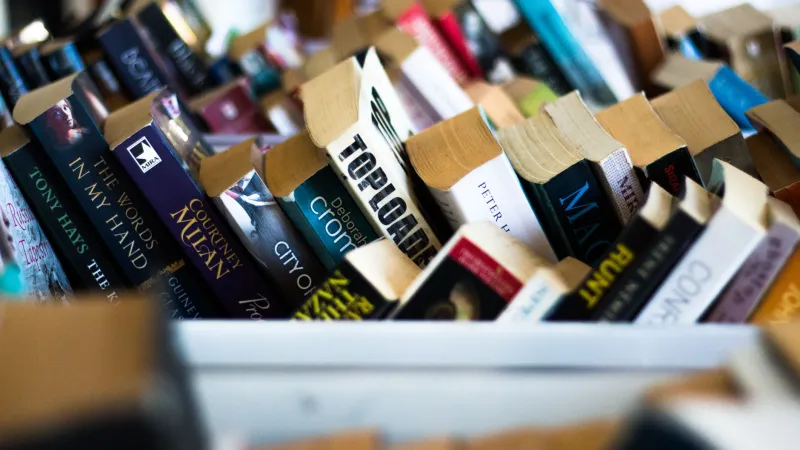
Arabic science fiction has a discovery problem in the UK, and it is not the writing. It is the shelving. Walk into a good bookshop and you will find Arabic novels under 'World Literature', 'Middle East' or 'Fiction in Translation'. You will rarely find them under SF. That matters, because a reader who loves speculative fiction does not usually start browsing in general fiction. They start where the impossible cities and haunted futures are. So first contact between UK readers and Arabic SF often happens by accident: a cover on a table, a friend's recommendation, a book club pick that turns out stranger than the blurb admits.
This is not a complaint about booksellers. It is a map of a gap. The speculative tradition in Arabic is rich and varied, from dystopian Cairo to Palestinian futures to Iraqi ghosts. Much of it is now in English. The problem is that UK shops sort translated fiction by geography and genre fiction by mood, and Arabic SF falls between the two. In 2026, that gap is still there. But it is easy enough to cross if you know what to ask for.
The shelf is not the genre
Bookshops are not libraries. They are shops, and they arrange books where they think readers will find them. A novel translated from Arabic might be filed under 'World Literature' because that is where the buyer expects to sell it, even if it features a city under surveillance, a queuing bureaucracy or a creature stitched together from the dead. Meanwhile, the SFF section is often dominated by anglophone series and tie-ins. The result is that Arabic speculative fiction gets read as 'world literature' by readers who might never pick up a genre novel, and ignored by genre readers who never browse the general shelves.
Diaspora writing adds another layer. Speculative novels written in English by authors of Arab heritage, such as S.A. Chakraborty's The City of Brass, sit more easily on genre shelves, but they are often read as fantasy rather than as part of a wider Arab speculative conversation. That is fine as far as it goes, but it can make the translated tradition look like a separate, more 'serious' thing. It is not. The borders are porous.
A bookseller I spoke to at an independent shop in Bristol put it plainly: translated speculative fiction often sells better in general fiction, so that is where it goes. It is a commercial decision, not a verdict on the book. Her advice to readers was simple. Ask for the book, not the category. If you say 'Arabic science fiction', staff may freeze. If you say 'I am looking for The Queue by Basma Abdel Aziz, or anything like it', they can help.
Six doorways in
You do not need a reading plan. You need one good door. These six are not a canon; they are entry points, and most are short enough to try on a commute.
Iraq +100, edited by Hassan Blasim (Comma Press). A century after the invasion, Iraqi writers imagine what comes next. The stories are speculative, satirical and often bleak, but they are not uniform. Some read like science fiction, some like fables, some like reports from a future that has already happened. It is a strong place to start because it shows range.
Palestine +100, edited by Basma Ghalayini (Comma Press). Palestinian writers project forward to 2048 and beyond. The result is not a single political thesis but a set of imagined futures, some nightmarish, some quietly hopeful, some formally strange. For UK readers used to seeing Palestine in news copy, the speculative frame is a jolt in the best way.
The Queue by Basma Abdel Aziz, translated by Elisabeth Jaquette (Melville House). A city is governed by a queue that nobody can quite explain. Citizens wait for permission to live, while the bureaucracy grows its own logic. It is Kafka with a ticket machine, and it is one of the clearest examples of how Arabic fiction can use the dystopian template without sounding imported.
Utopia by Ahmed Khaled Towfik, translated by Chip Rossetti (Bloomsbury). A gated community of plenty sits beside a desperate outside. The novel is pulpy, sharp and occasionally crude, but it is a useful gateway: it wears its genre influences openly and asks uncomfortable questions about who gets to be safe.
Frankenstein in Baghdad by Ahmed Saadawi, translated by Jonathan Wright (Penguin). Strictly speaking, this is horror and speculative fiction rather than hard SF, but it belongs here. A creature made from the victims of bombings walks through the city, and the novel becomes a ghost story about occupation, grief and the stories people tell to survive. It is the gateway drug for many UK readers.
The Book of Disappearance by Ibtisam Azem, translated by Sinan Antoon (Syracuse University Press). One morning, the Palestinians of Jaffa vanish. What follows is a speculative history told through notebooks, fragments and absences. It is quieter than the others, and it rewards patience. If you like your SF with a documentary edge, start here.
How to ask for the shelf
Following translators is one of the most reliable ways to find the shelf. Elisabeth Jaquette, Jonathan Wright, Sinan Antoon and Chip Rossetti are good names to look for, and the Comma Press anthologies are a useful shortcut. So are imprints: Comma Press, Saqi Books, Melville House, Penguin and Syracuse University Press all publish work that belongs in this conversation.
If your local bookshop does not have a copy, ask them to order it by ISBN. That is not a fussy request; it is the job. If you are in a Waterstones, Foyles, Blackwell's or an independent, ask staff to check both the SFF and world literature sections. Sometimes the book is there, just filed under the other label. Libraries work the same way: a request line is a shelf-building tool.
And if you are a genre reader who usually sticks to the SFF aisle, try asking for Arabic speculative fiction by name. The category may not exist on the shelf, but the books do. The conversation is the first contact.
Why the shelf matters
Shelves teach readers what a tradition contains. If Arabic fiction appears only as realism, UK readers miss the fact that Arab writers have been imagining futures for a long time, and not only in the shadow of dystopia. Genre is not a ghetto; it is a doorway. The more often readers ask for these books by title, the more often booksellers will know where to put them. Start with one, then ask for another. That is how shelves change.