Request Lines and Reading Rooms: How UK Libraries Are Building Arabic Shelves
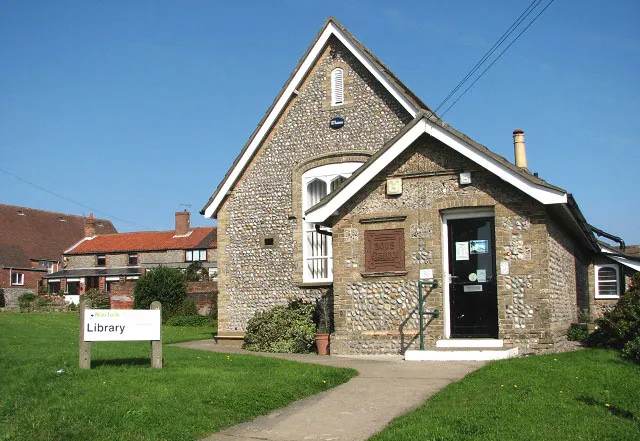
Photo: Evelyn Simak, CC BY-SA 2.0, via Wikimedia Commons
Public libraries in the UK are not usually described as radical. They are described as quiet, underfunded, essential. Yet in corners of Birmingham, Manchester and smaller towns, a quiet kind of collection-building is going on. Arabic literature - in translation, in Arabic, and in dual-language editions for children - is appearing on shelves that were once monolingual. The growth is patchy, often driven by individual librarians and community requests rather than national strategy. But it is real.
This is not only about books in Arabic. It is about Arabic literature as a reading culture: novels by Arab authors translated into English, poetry in dual-language editions, children's books that let families read together, and diaspora writing that sits between languages. For UK readers curious about Arab writing, the public library is often the first place to look - and the first place to ask.
What counts as an Arabic collection?
Library collections are built from profiles, requests and demand. A multilingual collection might include Arabic-language novels, English translations, bilingual picture books and dictionaries. A general fiction section might hold translated Arabic novels alongside French or Japanese fiction. The two approaches are not in competition. The first serves readers who read Arabic; the second serves readers who read English and want to read the world.
Selection is rarely glamorous. Librarians use supplier lists, reviews, publisher catalogues and community suggestions. They check whether a title has a reliable MARC record, whether the author's name is transliterated consistently, and whether the book will circulate. A novel that is celebrated in London may sit untouched in a branch where no one has promoted it. A children's dual-language book may be borrowed constantly because parents can read it with their children.
Birmingham: request slips and reading groups
Birmingham is one of the UK's most multilingual cities, and its library service has long carried community-language material. The Library of Birmingham and its network of community libraries hold Arabic titles, including children's books and translated fiction, though the depth varies by branch. Staff describe a practical process: readers ask, librarians check the catalogue, and stock is moved or ordered where possible.
The city's size is both an advantage and a problem. A central collection can be deep, but a reader in a smaller neighbourhood library may not see it. Requests and reservations bridge some of that gap. So do displays. A shelf labelled 'Arabic fiction in translation' can do more than a policy document, because it tells readers that the books are for them and not only for speakers of the language.
Birmingham's library service has also worked with community organisations and schools on reading events and multilingual storytelling. These partnerships matter. They bring in readers who may not think of the library as a place for Arabic literature, and they give librarians a sense of what will actually be borrowed.
Manchester: cataloguing as outreach
Manchester Central Library's multilingual collections are part of a long tradition of serving a diverse city. Arabic books sit alongside other community-language stock, and the central library's size allows for a broader range than most branches. But the interesting work is often in the details: how books are catalogued, displayed and explained.
A book in Arabic script can be hard to find if the catalogue record is poor. Transliteration is inconsistent: the same author may appear as Al-Rawi, Alrawi or Rawi. Subject headings may lag behind contemporary writing. Library staff sometimes create or upgrade records so that a book can be searched by title, author and theme. This is invisible labour, but it is the difference between a book being on the shelf and being findable.
Manchester's approach also shows the value of placing Arabic literature in conversation with other collections. A display on migration can include Arabic fiction, British diaspora writing and local history. An ESOL class can use dual-language stories. A poetry event can pair translated Arabic poems with open-mic responses. The books do not need to be segregated to be visible.
The reader's guide: how to request a title
If your local library does not have the Arabic novel you want, do not assume it never will. The request process is usually simpler than it looks.
-
Search the catalogue properly. Try the title, the author's surname and the translator's name. If the author's name has variants, search each one. Note the ISBN if you can find it; it makes requests much easier.
-
Ask a librarian for an interlibrary loan. Most UK library services offer this, though charges vary. You may pay a fee, sometimes waived for concessions or children. Give as much detail as possible: title, author, translator, publisher and ISBN. Ask how long it will take and whether there is a charge before you commit.
-
Suggest a purchase. If the book is recent, in print and likely to interest other readers, fill in a stock suggestion form. Librarians cannot buy everything, but a request with a clear reason - a reading group, a school project, a local author event - carries more weight.
-
Check nearby services. Some library authorities allow reciprocal borrowing or offer a wider regional catalogue. University libraries may allow reference access. The British Library's interlibrary loan service is another route, usually through your local library rather than directly.
-
Follow up politely. A single request can disappear. A reminder, or a note that you would be willing to help publicise the book, can keep it alive.
How to advocate for more Arabic stock
Advocacy works best when it is specific. Rather than asking for 'more Arabic books', ask for three named titles, a bilingual children's series or a translated poetry collection. Offer to help with a display or a reading list. Join the library's Friends group if it has one. Respond to council consultations on library services. Ask whether the collection policy mentions community languages and translated fiction, and whether it is reviewed regularly.
Libraries are not neutral warehouses. They are shaped by budgets, policies and the people who ask. In 2026, with public services under pressure, the Arabic shelf will not grow by accident. It will grow because readers ask for it, librarians fight for it, and someone puts the book face-out on a table near the door. That is a small act of cultural policy, and it is happening quietly up and down the country.