Renamed at the Border: Who Gets to Retitle Arabic Fiction for Britain?
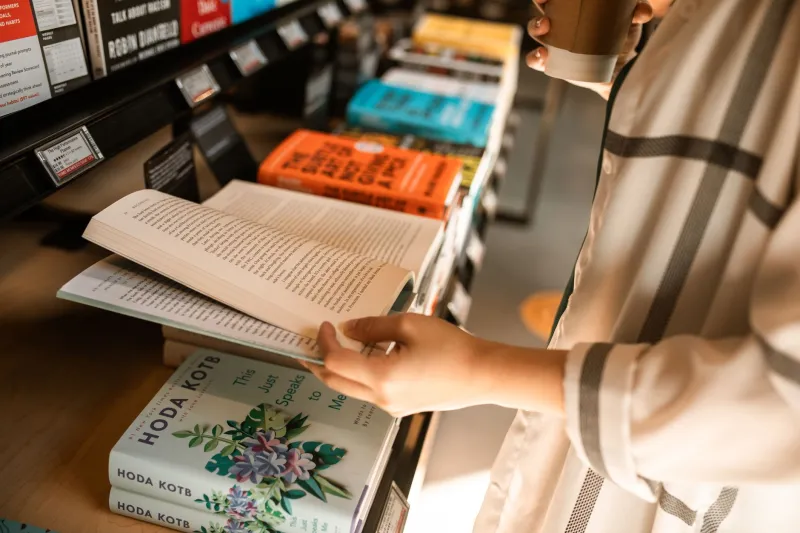
Photo: translated Arabic novels stacked on a UK bookshop table with English titles and typographic covers, via global-uploads.webflow.com
Every translated novel arrives in Britain with two titles. One is on the Arabic cover, where it may carry a rhythm, a pun or a religious echo that a reader in Cairo or Beirut hears before they even open the book. The other is on the English jacket, where it has to do a different job: be searchable, sayable, shelvable, and attractive on a Waterstones table in 2026. The gap between those two titles is one of the quietest, most revealing parts of how Arabic fiction is packaged here.
The title is a promise, not a label
An Arabic title can hold a whole literary tradition in three words. It can sound like a proverb, a verse or a family nickname. English titles tend to prefer a clean image or a phrase with a bit of narrative pull. That is not because English is cruder or Arabic is more poetic. It is because titles do different work in different book cultures. A title in Arabic may assume a reader who already knows the allusion. A title in English often has to explain, or at least gesture, to a reader who has never heard of the author and is standing in a bookshop with a coffee going cold.
So the English title is not just a translation of words. It is a translation of a promise. It tells the UK reader what kind of book they are about to meet: a family saga, a war novel, a metaphysical puzzle, a comic picaresque. Sometimes that promise is faithful. Sometimes it is a polite fiction.
Who actually changes it?
Usually there is no single villain. The translator is often the first person to hear the original title as a problem in English. They may offer a literal version, a few alternatives, and a note explaining what the Arabic is doing. The editor then tests the title aloud, asks whether it sounds too much like a report, too vague, too close to another book on the list. The rights and sales teams ask whether it is searchable and whether it can be said over the phone without a spelling lesson. The cover designer asks whether it fits a typeface and a mood. By the time the jacket is printed, the title may have passed through more hands than the manuscript.
This is not a scandal. It is publishing. But it does mean the English title is a collaborative object, not a transparent window. And because Arabic fiction still arrives in Britain in relatively small numbers, each title carries extra weight. It has to represent a book, a writer, a language and sometimes a whole region on a shelf that may only have one or two other Arabic novels on it.
Softened, sharpened, swapped
The examples are instructive. Sinan Antoon's Arabic title Wahm means illusion or delusion. In English it became The Corpse Washer: a concrete figure, a trade, a gothic image. The English title is easier to shelve beside historical fiction and crime, and it gives the reader a person to follow. What it loses is the metaphysical wobble of the original, the sense that the whole book might be a trick of the mind.
Jokha Alharthi's Sayyidat al-Qamar is usually rendered literally as Ladies of the Moon. The English title is Celestial Bodies, which is cooler, more cosmic and more abstract. It won the Man Booker International in 2019 and has since become one of the most visible Arabic novels in UK bookshops. Celestial Bodies sounds like an ensemble novel about fate and astronomy. Ladies of the Moon sounds like a folk tale. Both are true to parts of the book, but they invite different readers.
Khaled Khalifa's No Knives in the Kitchens of This City was shortened in English to No Knives in This House. The menace survives; the city and the kitchens do not. The English title is more domestic, less specific. It could be a thriller about a family. The Arabic title is unmistakably about a place and its public life. That is a real loss, even if the shorter title is easier to remember.
Then there is Fihris, which means index, becoming The Book of Collateral Damage. The English title explains the mechanism and adds a moral phrase. It is more commercial and more immediate. It is also less enigmatic. Ya Maryam became The Baghdad Eucharist, adding a city and a ritual to a title that was originally an intimate address. The English version helps a UK reader place the book, but it shifts the emphasis from one relationship to a communal ceremony.
The British shelf has its own grammar
UK bookshops have their own grammar of titles. A novel with Baghdad or Damascus in the title does a lot of work: it signals place, history and contemporary relevance. But too much explanation can make a novel sound like a report. Too little can make it sound like a mood board. The best English titles sit between those poles. They give the reader a handle without telling them what to think.
Booksellers will tell you that a title has to survive being said aloud. If a customer cannot pronounce it, they may not ask for it. If it is too long, it may not fit on a spine. If it is too generic, it may vanish in an online search. These are mundane pressures, but they shape what British readers actually see. The title is not the whole book, but it is the first translation most readers encounter.
What gets lost is often the sound
Arabic titles often carry assonance, a definite article, a rhyme or a religious cadence. English titles are often noun phrases: clean, portable, a little flat. The translator has to choose between keeping the music and keeping the meaning. Sometimes they can keep both. Often they cannot. A good English title is not a betrayal. It is a second translation, and it deserves to be recognised as one.
That recognition could be simple. Publishers could print the original Arabic title on the copyright page or the jacket flap. More reviews could mention it. Booksellers could point it out. None of this would undo the commercial pressures, but it would let the English title be a conversation rather than a replacement.
So the next time you pick up an Arabic novel in a British bookshop, read the title as a translation too. Ask what it was called before. The answer is often a small, revealing lesson in how Arabic fiction is renamed, repackaged and recommended here, and in what a title has to do to cross the border.