Unforbidden Stories: What UK Blurbs Miss When They Sell Arabic Fiction
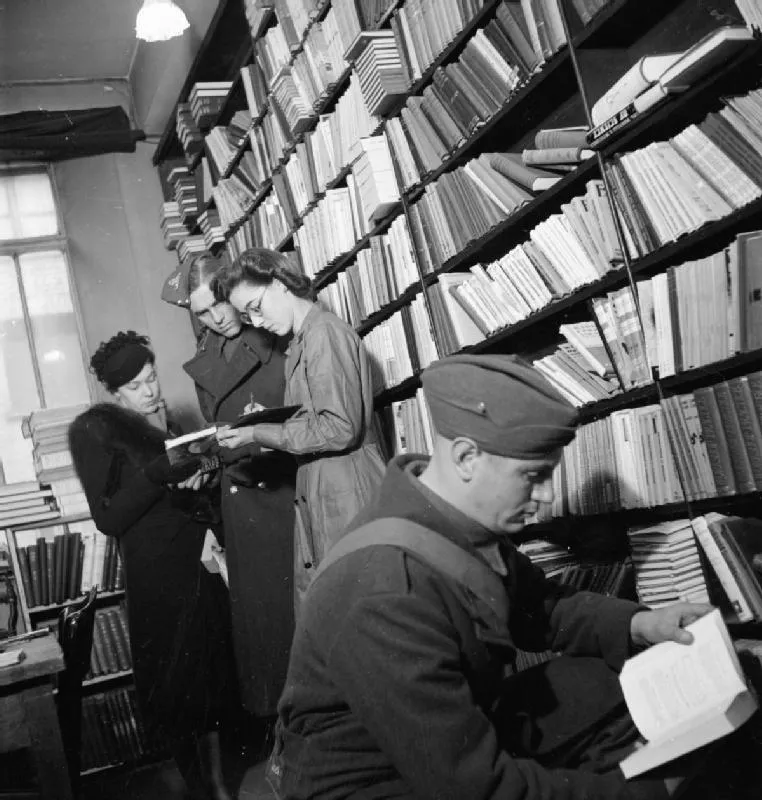
Photo: Ministry of Information Photo Division Photographer, Public domain, via Wikimedia Commons
Walk into any UK bookshop with a decent translated-fiction section and pick up three or four Arabic novels in English. The covers will vary. The blurbs will not. A woman is caught between two men. A family hides a secret. A city burns. A forbidden love threatens to expose everything. The prose is described as lyrical; the setting as sun-scorched; the story as one that must be told. None of this is exactly false. It is just a very narrow door into a very large house.
The back cover is a contract
A blurb is not a review and it is not a summary. It is a promise. When jacket copy tells a reader that the novel inside is about forbidden love under a repressive regime, the reader opens the book expecting a plot with those coordinates. If the novel turns out to be a comedy of manners set in a Cairo apartment block, or a meditation on language and inheritance, or a ghost story about a family house, the reader feels misled — not because the book is bad, but because the back cover sold them a different book.
This is the trap. Not that politics does not matter in Arabic fiction. Of course it does. The trap is that politics becomes the only shelf on which the book is allowed to sit. The novel is presented as a window onto a place, rather than as a piece of writing with its own habits and pleasures. The reader is invited to look through the window, not to listen to the voice in the room.
What the copy keeps promising
Look at recent UK editions and the same phrases cluster. Forbidden. Hidden. Secret. Dangerous. A country on the brink. A love that cannot speak its name. A woman who dares. The covers often follow suit: a veil, a window, a silhouetted woman, a dusty street, a fragment of Arabic script used as texture rather than language. Some publishers have moved on — Fitzcarraldo’s editions of Adania Shibli are cool and abstract rather than orientalist — but the copy often lags behind the design.
The result is a strange mismatch. A novel might be formally daring, full of jokes, or deeply domestic, or obsessed with theology, or written in a voice that owes more to Beckett than to the news bulletin. The blurb files it under oppression and moves on. British readers are tough enough to handle complexity. They are also curious enough to want more than a moral weather report.
The booksellers’ view
Booksellers I have spoken to in London, Liverpool and Bristol describe a similar pattern. Readers arrive wanting to read more Arabic fiction, often after a prize longlisting or a festival panel. They ask for something about exile, or war, or women’s lives. Those are legitimate entry points. But the same readers often come back saying the book was not what they expected — sometimes better, sometimes just different. The blurb had promised a thriller and delivered a slow study of grief. Or it had promised a love story and delivered a satire of bureaucracy.
Translators describe the problem from the other side. A translator spends months finding the register of a novel — its jokes, its repetitions, its sudden shifts into poetry or slang — and then sees the jacket copy flatten all of that into a single note. One translator I spoke to said the hardest part is not the text but the packaging: convincing a publisher that a novel can be political without being a testimony, and literary without being difficult.
What gets lost in the veil
What gets lost is ordinary life. Arabic novels are full of rent, neighbours, school runs, bad jobs, family arguments, football, cooking, gossip, boredom and the weather. They are also full of formal experiment. Some are epistolary. Some are written in fragments. Some have unreliable narrators who are more interested in language than in plot. Some are very funny. The forbidden-story frame makes all of this feel like decoration around the real business of suffering.
That is not only a marketing problem. It shapes what gets translated, what gets reviewed, and what British readers think they are supposed to admire. If the only acceptable Arabic novel is the one that confirms a Western reader’s sense of tragedy, then the quieter, odder, more playful books have a harder time finding a home. The forbidden story becomes a self-fulfilling prophecy.
A better vocabulary
So what should jacket copy do instead? Start with genre and craft. Is it a satire? A family saga? A ghost story? A campus novel? A bureaucratic farce? A love story that is also about language? A novel of ideas? Say whether it is funny. Say whether it is difficult. Say whether the pleasure is in the sentences or the plot. Say what the translator has done, if there is space. A blurb that says ‘a deadpan comedy about a queue’ is more honest than one that says ‘a searing portrait of a city in crisis’ — and it is more likely to find the right reader.
This does not mean stripping politics out. It means being specific about how politics lives inside the book. Is it in the family? In the paperwork? In the jokes? In the silence? A novel can be about a checkpoint and still be a comedy of manners. A novel can be about a wedding and still be a portrait of a state. The honest blurb holds both.
The reader’s part
Readers can help by refusing the first frame. If a blurb promises forbidden love and the first chapter is about a man buying a fridge, stay with it. Ask what the book is doing rather than what the cover says it is doing. Recommend the odd ones. Tell your bookshop that you want the funny Arabic novel, the experimental one, the one about neighbours. The market listens, slowly.
Arabic fiction is not a single story, and it is not a single warning. It is a literature with its own arguments, jokes and dead ends. The forbidden story is not the only story. It is not even the most interesting one. The back cover should stop pretending otherwise.