The Reading Report Is the Gatekeeper: How an Arabic Novel Really Gets Picked Up in Britain

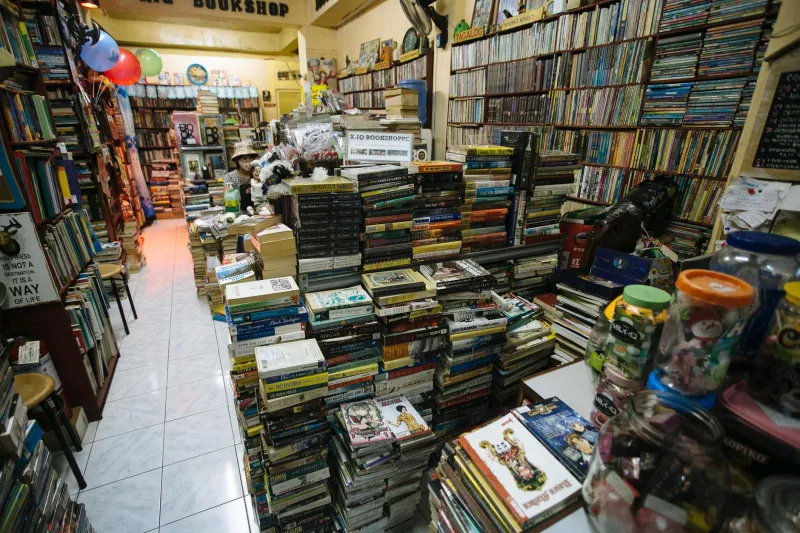
Photo by Photo by Nellie Adamyan on Unsplash on Unsplash
Most British readers meet an Arabic novel in its final form: a jacket, a blurb, a three-for-two sticker. What they don't see is the eighteen months of quiet correspondence that came first — the sample translation emailed on a Friday afternoon, the readers' report that damned a book with the phrase "beautifully written but hard to place", the acquisitions meeting where three people decide whether a novel from Baghdad can shift more than 900 copies.
That gap between the Arabic manuscript and the UK shelf is not a mystery. It is a process, and a fairly mundane one. Understanding it won't tell you which books are good, but it will tell you why the shelf looks the way it does.
It starts with a sample, not a manuscript
British editors, with a handful of exceptions, do not read Arabic. They read a sample translation — usually ten to twenty pages — alongside a synopsis and a short pitch from a rights agent or a scout. The sample is the whole ball game. If those pages are stiff, or over-explained, or simply fail to land in English, the novel is dead on arrival, no matter how celebrated it is in Cairo or Beirut.
Who pays for the sample? Often the publisher, for a few hundred pounds. Sometimes a grant covers it — English PEN's Translates scheme, or one of the translation funds attached to Arabic literary prizes. Occasionally the translator does it on spec, for nothing, because they believe in the book. That is the least romantic and most consequential fact about translated fiction: the gate is opened by unpaid or badly paid labour.
The fair is a filter, not a shortcut
Every October, the publishing industry decamps to Frankfurt. Last month's fair will have produced thousands of meetings, most of them short and most of them ending in a polite "not for us". Arabic fiction is represented there by a small number of rights agents, mostly based in Amman, Beirut and Cairo, who arrive with a list of maybe six or eight titles and a folder of English samples.
It is worth being clear about what a book fair actually is. It is not a place where editors discover books in a romantic haze. It is a place where books that have already been filtered by agents, scouts and translators get summarised to people who are already exhausted. A novel needs a champion in the room — someone who has read the whole thing, not just the sample, and who can say "this one" with a straight face. Without that champion, the book becomes a line in a spreadsheet and then a line that gets deleted.
The translator as scout
The other main route into a UK publisher does not go through a fair at all. It goes through a translator who has read something they cannot stop thinking about, translated twenty pages on their own time, and sent it to a small press. This is how a good number of the Arabic novels on British shelves actually arrived — not through a grand rights deal but through an email with a PDF attached and a subject line that says "you might like this".
Small presses are the ones who say yes. Comma Press, And Other Stories, Saqi, Darf, Banipal — these are the imprints doing the quiet, unglamorous work of building an Arabic list one book at a time. They have smaller advances and smaller print runs, and they are more likely to take a risk on a short story collection, a strange little novel, or a book that doesn't fit the "issue" frame.
The word "difficult" and other commercial weather
When a novel is rejected, the reason given is rarely the real reason. The real reasons are commercial: it's too long (anything over 400 pages is a hard sell), it's too experimental, it's funny in a way that doesn't travel, it's quiet. The word "difficult" gets used a lot, and it usually means "I can't see the headline".
British publishing has a narrow idea of what an Arabic novel is for. War, exile, the lives of women under pressure — these are the frames that sell, and they are not dishonest frames. But they are frames. The comic novel, the domestic novel, the novel about a man having a mild crisis in a small town: these are harder to place, because the market has not been trained to expect them. The books that never make it across are often the ones that would complicate the picture in the most interesting way.
What this means for your next purchase
None of this is a reason to despair. It is a reason to be deliberate. If you want more Arabic fiction in English, the most effective thing you can do is buy the books that already exist, ask your local bookshop to stock them, and request them at your library. Every purchase is a data point. Every request is a small argument that the market is wider than the spreadsheet thinks.
The shelf is the end of a long chain. You are the last link, and the only one with a card in your pocket.